|
|
|
About Dana
LeJune & Associates
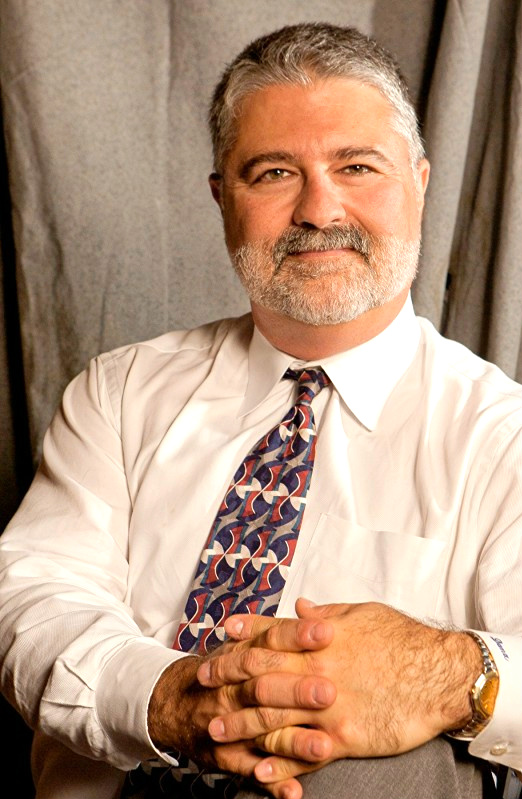
Dana Andrew LeJune was born in Beaumont, Texas in 1956 into a Cajun, rice sharecropping
family. He graduated from French High School there in 1975. In 1976 he began
his undergraduate studies at the University of Texas at Austin, and received his B.A. in
History three years later. He taught Government and History at French High School through
May, 1979, when he began law school.
Mr. LeJune attended South Texas College of Law and graduated with a J.D. in December,
1982, after having published a maritime law article in the August, 1982 South Texas Law
Journal. He took the February, 1983 Texas Bar Exam, and was licensed to practice law in
Texas in May, 1983. After working for a small civil litigation firm for a short period of time,
he began the solo practice of law in late 1983. From 1994 - March, 2003, Mr. LeJune
partnered with Jeffrey R. Singer, a Baylor Law Graduate, in the firm, LEJUNE & SINGER.
Late in the partnership tenure, Mr. Singer moved to Richmond, Texas, and opened his own
office in Sugar Land, Texas. Monsieurs LeJune and Singer continue to associate on cases,
and remain good friends.
Mr. LeJune is "AV" rated by Martindale-Hubbell, the premiere rating by the oldest and
most respected legal professional evaluator in America. Mr. LeJune is admitted to practice
in all Texas State Courts, as well as all four Federal Districts of Texas. He is also admitted
to practice in the following Federal Courts around the nation: Western District of Tennessee,
Western District of Michigan, District of Colorado, Eastern and Western Districts of
Wisconsin, Northern District Court of Indiana, District of Nebraska, Eastern and Western
Districts of Arkansas as well as the Fifth Circuit Court of Appeals in New Orleans, and the
United States Supreme Court in Washington, D.C.

At various periods over the years, Mr. LeJune has been a member of the following
professional organizations: The Houston Bar Association, American, Texas, and Houston
Trial Lawyers Associations, Houston Young Lawyers Association, American Bar
Association, National Employment Law Association, and State Bar College of Texas. In
1998, the State Bar of Texas Grievance Committee appointed him to sit on the District 4E-15
Panel in preliminary judgment of grievances filed by consumers against local attorneys
through the year 2001, and in 2001 he was elected chairman of that committee and served
in that capacity until term limits applied in 2003.
Mr. LeJune became Board-Certified by the Texas Board of Legal Specialization in Civil
Trial Law in 1991, and has maintained that certification ever since. He has sat on the boards
of various charitable and corporate boards, including local Public Radio Stations.
Mr. LeJune regularly handles, litigates and tries many types of civil cases, including business
litigation (breach of contract, partnership liability, shareholder actions, and claims involving
non-competition, antitrust and unfair competition), labor and employment (wrongful
termination, age, race and sex discrimination, sexual harassment including hostile work
environment and/or quid pro quo retaliatory discharge, labor code including FLSA, and
whistle-blower cases), cases involving consumer law and deceptive trade practice (home and
car defect and "rip-offs"), trademark and copyright infringement cases (involving primarily
professional photographers, architects, draftsmen, illustrators, design, public relations
firms, and advertising agencies), personal injury cases -- automobile collisions, product
liability (defective products), nonsubscriber workplace injuries (on-the-job injuries where the
employer does not have workers compensation insurance), premises liability such as
inadequate security and slip/trip and falls) -- and professional negligence cases (medical,
architectural, accounting and legal malpractice).
He is the "recommended attorney" for the Texas Chapter of the American Society of Media
Photographers, and has represented many members of that organization. He has also
represented nonmember photographers, as well as illustrators, architects, design and public
relations firms, and advertising agencies in copyright matters since 1983.
In 2009 he authored and presented, "Copyright for the General Practitioner... Oops!" to the
Houston Bar Association, and to a Communications Law Class at University of Houston.
He has been married to Tammy Lynn Forbes for too long, and has three children, all of whom
received a Catholic Middle School education.
Back to top
Types of cases
Mr. LeJune handles most all categories of civil cases, including:
- personal injury
automobile collisions
product liability & defective products
nonsubscriber workplace injuries, on-the-job injuries where the employer
does not have workers compensation insurance
premises liability such as inadequate security and slip/trip and falls
- professional negligence
medical, architectural, accounting and legal malpractice
- business litigation
breach of contract, partnership liability, shareholder actions, and
claims involving non-competition, antitrust and unfair competition
- labor and employment
wrongful termination, age, race and sex discrimination, sexual harassment
including hostile work environment and/or quid pro quo retaliatory
discharge, labor code and whistle blower cases
- consumer law and deceptive trade practice
home and car defects, and "rip-offs"
- trademark and copyright
infringement involving professional photographers, architects, illustrators,
design, public relations firms, and advertising agencies
Mr. LeJune is the "recommended attorney" for the Texas Chapter
of the American Society of Media Photographers, and has represented
many members of that organization. He has also represented nonmember
photographers, as well as illustrators, architects, design and public
relations firms, and advertising agencies in copyright matters.
The benefits of hiring a small law firm.
Working with a small firm is much more rewarding than working with a
large law firm for both the client and the attorney. It allows you
to establish a personal relationship with me, and not worry about an
inexperienced lawyer being assigned your case, as often happens at
larger firms.
It allows me to decide what type of cases I handle and to take full
responsibility for my choices. I do not have any minimum billing requirements,
nor do I have to justify the amount of time I spend on a case to anyone
except my client. This commitment and accountability gives you a level
of personal service you will not find at large law firms.
College of the State Bar:
Continuous Member Since 1984
The College of the State Bar of Texas recognizes lawyers who participate
in continuing legal education to maintain and enhance their professional
skills and the quality of their service to the public. The State Bar
mandates that every lawyer completes fifteen hours of continuing legal
education each year.
The College of the State Bar doubles that requirement to thirty hours
per year. Historically, only about eight percent of the attorneys in
Texas are able to meet the tough requirements for membership in the College
of the State Bar of Texas.
I qualified for the College of the State Bar of Texas in 1984 and have
maintained my membership every year since.
Grievance Committee Service
The District Grievance Committees of the Texas Bar Association are designed
to assess written complaints and enforce the Rules of Disciplinary
Procedure. The Committees review the classified written complaints,
and hold various types of hearings, some where testimony is under oath,
and some informal, to determine if there is Just Cause to believe that
the lawyer under complaint has shown professional misconduct.
If there is evidence of Just Cause, the Respondent (accused) attorney
may elect to have his or her case heard before an Evidentiary Panel of
the District Grievance Committees to determine whether misconduct occurred
and, if so, the appropriate sanction.
I served as an active member for three years, then as Chairman of the
4-E-15 Grievance Panel for three years.
For more information on what to do if you believe your lawyer has not
performed ethically, please visit the State
Bar Website.
Back to top
|